

Hey there! I'm a supplier of CNC Milling Part Services, and today I wanna talk about how we ensure dimensional accuracy in our work. It's a crucial aspect of what we do, and I'm excited to share the ins and outs with you.
First off, let's understand why dimensional accuracy is so important. In the world of CNC milling, even the slightest deviation from the specified dimensions can lead to parts that don't fit together properly, which can cause all sorts of problems down the line. Whether it's for CNC Mechanical Parts used in automotive engines or High Speed Aluminum Milling components for aerospace applications, getting the dimensions right is non - negotiable.
High - Quality Equipment
One of the key factors in ensuring dimensional accuracy is the use of high - quality CNC milling machines. These machines are like the workhorses of our operation. They're equipped with state - of - the - art technology that allows for precise control over the cutting process.
Our machines have high - resolution encoders that can measure the position of the cutting tool with extreme accuracy. This means that we can control the movement of the tool down to the tiniest fraction of a millimeter. For example, when milling CNC Milling Components, the encoder can detect even the slightest change in position and adjust the tool path accordingly.
We also regularly maintain and calibrate our machines. Just like a car needs regular tune - ups to run smoothly, our CNC milling machines need to be kept in top condition. We have a team of experienced technicians who perform routine maintenance checks, replace worn - out parts, and calibrate the machines to ensure that they're operating at peak performance. This helps to minimize any errors that could occur due to machine wear or misalignment.
Advanced CAD/CAM Software
Another important tool in our arsenal is advanced CAD/CAM software. CAD (Computer - Aided Design) software allows us to create detailed 3D models of the parts we're going to mill. We can specify all the dimensions, tolerances, and features of the part in the CAD model.
Once the CAD model is complete, we use CAM (Computer - Aided Manufacturing) software to generate the tool paths for the CNC milling machine. The CAM software takes into account the geometry of the part, the type of cutting tool we're using, and the material we're machining. It then calculates the most efficient and accurate way to cut the part.
The beauty of CAD/CAM software is that it allows us to simulate the machining process before we actually start cutting the material. We can visualize how the tool will move, check for any potential collisions or errors, and make adjustments to the tool paths as needed. This helps us to catch any issues early on and ensure that the final part will meet the required dimensional accuracy.
Skilled Operators
No matter how good the equipment and software are, they're only as effective as the people operating them. That's why we have a team of highly skilled and experienced operators.
Our operators have years of training and hands - on experience in CNC milling. They know how to set up the machines, load the cutting tools, and program the tool paths. They're also familiar with different types of materials and how to machine them to achieve the best results.
During the machining process, our operators closely monitor the machines and the parts being milled. They use precision measuring tools, such as micrometers, calipers, and gauges, to check the dimensions of the part at various stages of the process. If they notice any deviations from the specified dimensions, they can make immediate adjustments to the machine settings or the tool paths.
For example, if the operator measures a part and finds that a particular dimension is slightly off, they can adjust the feed rate, spindle speed, or depth of cut to correct the issue. Their expertise and attention to detail are essential in ensuring that the final part meets the required dimensional accuracy.
Quality Control Processes
We have a comprehensive quality control process in place to ensure that every part we produce meets the highest standards of dimensional accuracy.
First, we perform incoming inspections on all the raw materials we use. We check the quality and dimensions of the raw material to make sure it meets our specifications. If the raw material is not up to par, we won't use it.
During the machining process, we conduct in - process inspections at regular intervals. Our operators use the precision measuring tools mentioned earlier to check the dimensions of the part as it's being milled. This helps us to catch any issues early on and make corrections before the part is fully machined.
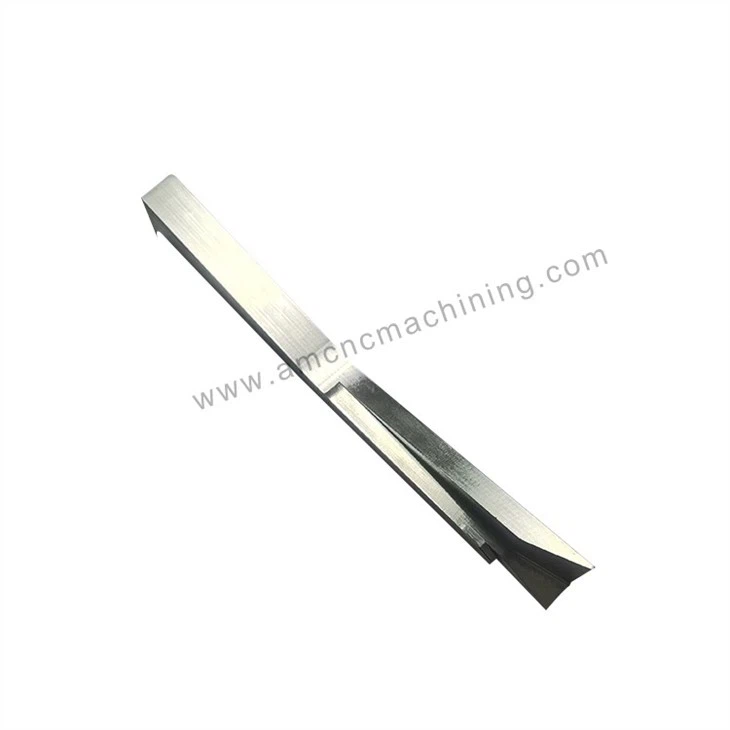

Once the part is complete, it undergoes a final inspection. We use a coordinate measuring machine (CMM) to measure the part's dimensions with extreme accuracy. The CMM can measure the part from multiple angles and compare the actual dimensions to the specified dimensions in the CAD model. If the part passes the final inspection, it's approved for shipment. If not, it goes through a rework process to correct the dimensional errors.
Material Selection and Handling
The choice of material can also have a significant impact on dimensional accuracy. Different materials have different properties, such as hardness, thermal expansion, and machinability.
We carefully select the materials based on the requirements of the part. For example, if the part needs to have high strength and durability, we might choose a steel alloy. If weight is a concern, we might opt for aluminum.
We also pay close attention to how we handle the materials. Improper handling can cause the material to warp or deform, which can affect the dimensional accuracy of the final part. We store the materials in a controlled environment to prevent any damage or changes in their properties. When we're machining the material, we use proper clamping techniques to hold the part securely in place and prevent any movement during the cutting process.
Conclusion
In conclusion, ensuring dimensional accuracy in CNC milling part services is a multi - faceted process. It involves using high - quality equipment, advanced CAD/CAM software, skilled operators, and a comprehensive quality control process. By paying attention to every detail, from material selection to final inspection, we can produce parts that meet the most demanding dimensional requirements.
If you're in the market for high - quality CNC Mechanical Parts, High Speed Aluminum Milling components, or CNC Milling Components, we'd love to hear from you. We're confident that our expertise and commitment to dimensional accuracy can meet your needs. Don't hesitate to reach out and start a conversation about your project.
References
- "CNC Machining Handbook" by John Doe
- "Advanced Manufacturing Technology" by Jane Smith
- Industry whitepapers on CNC milling and dimensional accuracy


