

CNC Turning Parts
We were established in 2012. We specialize in manufacturing various metal parts according to customer requirements. Over the years, we have grown into a manufacturer of spare parts and metal parts, which are used in automobiles, furniture, electrical equipment, medical treatment, sanitary ware and construction. industry. With our long-term experience, we are a well-known reliable manufacturer in the CNC machining industry. And trusted by domestic and foreign entrepreneurs, we have a group of professional technicians and advanced production equipment to produce high-quality products, such as steel, copper, brass, stainless steel, aluminum, etc.
-
-

-
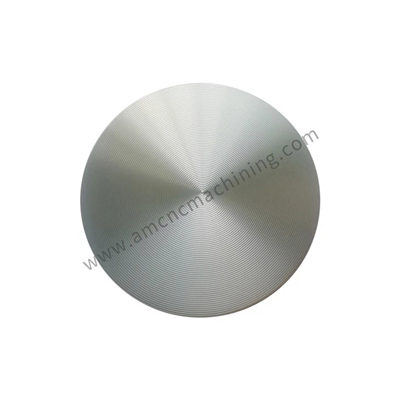
 Aluminum Precision Turned Components-Conducive to better shaping of the product.. -The resulting product has a stable appearance andAdd to Inquiry
 -
 CNC Turning Machining PartsCNC turning provides a higher level of accuracy, manufacturers can also reduce waste because theyAdd to Inquiry
 -
 CNC Lathe Turning MachiningThe high-precision processing equipment factory fully supports the manufacturing of precision parts.Add to Inquiry
 -
 CNC Precision Turned PartsWe are a professional manufacturer of hardware OEM parts, which can produce products including autoAdd to Inquiry
 -
 CNC Turning Parts ProductThe lathe not only can handle up to thousands of projects, but the accuracy and quality of eachAdd to Inquiry
 -
 CNC Milling and Turning ServicesProvide a wide range of materials, various surface treatments and strict tolerances!Add to Inquiry
 -
 CNC Lathe Machining Service. Allows the application of various designs, patterns and details.. . Measurement and thickness canAdd to Inquiry
 -
 CNC Lathe Machine Parts ServiceThe quality is reliable and the product has a long service life.. The product is perfect andAdd to Inquiry
 -
 CNC Turning Component ServicesReduce production time. Reduce the risk of human error. Reduce labor costs.Add to Inquiry
 -
 CNC Lathe ComponentsVarious standard spherical, polygonal and drilling designs, etc.Add to Inquiry


- Tel: +8615322409709
- Email: alex@amcncmachining.com
- Add: 1048#, Shatou, Changan, Dongguan, China 523841
Production Market
USA, Canada, Netherlands, Denmark, UK, Germany, Spain, Israel etc.
Production Equipment
CNC milling machine, CNC turning machine,CNC turning and lathe...
Professional Team
We can provide you with high-quality products and actively respond to your inquiries. At the same time, our team members are omnipotent and have accumulated professional and rich experience in CNC operation, and will provide you with consultation and feedback to meet your requirements to the greatest extent.
One-Stop Service System
We also provide other additional services, such as metal plating, painting, and packaging. Both domestic and international customers can get a full range of services from our one-stop service system.
Parameters

Cutting speed: This is the speed at which the cutting tool engages the workpiece. It’s vital for determining the efficiency and quality of the cut.
Feed rate: Refers to the rate at which the workpiece is fed to the cutting tool, crucial for the control of material removal.
Depth of cut: This dictates how deep the cutting tool penetrates into the material, impacting the final shape and finish of the part.
Tool geometry: The shape and size of the cutting tool influence the type of cuts and the finish on the material.
Material of the workpiece: Different materials, from metals like steel and aluminum to plastics, require different turning parameters.
Coolant flow: The flow of coolant is essential for maintaining the temperature and ensuring the longevity of the cutting tool.
Spindle speed: This is the rotation speed of the spindle, which holds the workpiece or the tool, playing a key role in the turning operation.
Tool material: The material of the cutting tool determines its durability and suitability for different materials.
Chip control: Effective chip control is essential for maintaining the quality of the workpiece and the safety of the operation.
Machine rigidity: The rigidity of the CNC turning machine affects its ability to handle different materials and operations without distortion.
Tolerance levels: This refers to the degree of precision and accuracy that the CNC turning process can achieve.

Materials
Steel
Known for its strength and durability, steel is commonly used in CNC turning for parts that require resilience.
01
Aluminum
Lightweight yet strong, aluminum is preferred for parts that need to be both sturdy and light.
02
Brass
With its low friction and non-sparking properties, brass is ideal for components in electrical applications.
03
Copper
Highly conductive, copper is often used in electrical components.
04
Plastics
Various plastics are used in CNC turning for their versatility and lower cost, suitable for a wide range of applications.
05
Advantages of CNC Turning Parts


Safer operations
Compared to other manufacturing options, CNC turning is very safe. Of course, any kind of rotating machinery can be dangerous. The difference with CNC turning machines is that they can be very hands-off. Short of loading material and installing the cutting tools, the machinist has very little interaction with the part.
Efficiency is improved
With any CNC machine, efficiency is improved by a lot. When you need to manually measure, move, adjust, and run machines, there’s a lot of room for error. It’s a simple fact that computers can help us be more efficient than ever.
Higher precision is unlocked
With higher precision, shops can create more intricate parts and generate more impressive assemblies. When we use our CNC turning machine, we create high-precision parts that would be otherwise impossible to make.
Improved repeatability and Accuracy
With large orders, accuracy and repeatability are among the biggest concerns. If a machine can create a lot of nearly identical parts very quickly and hit small tolerances, then the customer will get the best results. CNC turned parts are some of the most accurate and repeatable when it comes to manufacturing.
Versatile method
When a unit needs to be made from a cylindrical piece of stock material, there are few better operations than CNC turning. It can create something as small and intricate as the hands of a pocket watch, or it can craft massive wind turbine shafts.
It all depends on how large the turning machine is, and how the shop is equipped. At its core, the principles behind CNC turning are very simple and apply to countless different applications.
Throughput is increased
Another big benefit of CNC turned parts is that they can be fabricated much quicker than if you used other methods. If you wanted to make a dozen sleeves that had a certain ID, OD, and length, it could realistically be done with a single piece of material and three cutting operations.
Application of CNC Turning Parts
Automotive
CNC turning produces everything from gears and shafts to automobile parts. The process guarantees exceptional precision and consistency, which are crucial for the smooth operation of automotive components.
Oil and Gas
CNC turning manufactures high-strength components that can withstand extreme pressure and harsh environmental conditions, such as drilling tools, connectors, and more.
Aerospace
Precision, durability, and performance are non-negotiable in the aerospace industry. Hence, CNC turning is indispensable. They create critical parts like turbine shafts and control systems.
Industrial machinery
CNC turning plays a significant role in the manufacturing of industrial machinery components, from large, robust pieces to more minor, high-precision parts. Turning centers and advanced CNC machines enhance production speed and quality by performing various tasks like milling, drilling, and tapping, making them versatile and efficient for producing complex parts.
Agriculture
CNC turning is commonly used to make farm equipment and machinery components, such as shafts, bushings, spindles, and various fittings.
Pre-sale service:
- Quick answers from professionals
- Free design drawings
- Speed quote: working days: within 24 hours; holidays: within 72 hours
- Free samples
- Provide OEM & ODM custom service
- 7*24 online service;We can arrange factory inspection service according to customer's requirement
- Professional quality inspection & logistics follow-up
- Long warranty period: 18 months
- Free installation guidance (telephone & video & on-site)

FAQ
We're well-known as one of the leading cnc turning parts manufacturers and suppliers in China. Welcome to buy high quality cnc turning parts at low price from our factory. For customized service and free sample, contact us now.
cnc prototype parts, automated cdc component services, Customized CNC Machining Steel Parts