

Can CNC Milling Parts be Made with Complex Geometries?
In the world of manufacturing, the demand for parts with complex geometries has been on a steady rise. As a leading supplier of CNC milling parts, I often encounter questions from clients about the feasibility of creating such intricate components. In this blog post, I'll delve into the capabilities of CNC milling in producing parts with complex geometries, exploring the technology, processes, and limitations involved.
Understanding CNC Milling
CNC (Computer Numerical Control) milling is a subtractive manufacturing process that uses computerized controls and rotating multi-point cutting tools to remove material from a workpiece. This process is highly versatile and can be used to create a wide range of parts, from simple blocks to highly complex shapes. The precision and accuracy of CNC milling make it a popular choice for industries such as aerospace, automotive, medical, and electronics, where high-quality parts with tight tolerances are required.
The Capability of CNC Milling for Complex Geometries
One of the key advantages of CNC milling is its ability to produce parts with complex geometries. Modern CNC milling machines are equipped with advanced software and control systems that allow for precise control of the cutting tools. This enables the creation of parts with intricate shapes, including curved surfaces, pockets, slots, and holes in various orientations.
For example, in the aerospace industry, components such as turbine blades and engine casings require complex geometries to optimize performance. CNC milling can accurately machine these parts, ensuring that they meet the strict specifications and tolerances required for aerospace applications. Similarly, in the medical field, custom implants and surgical instruments often have complex shapes to fit the unique anatomy of patients. CNC milling provides the precision needed to manufacture these parts with high accuracy.

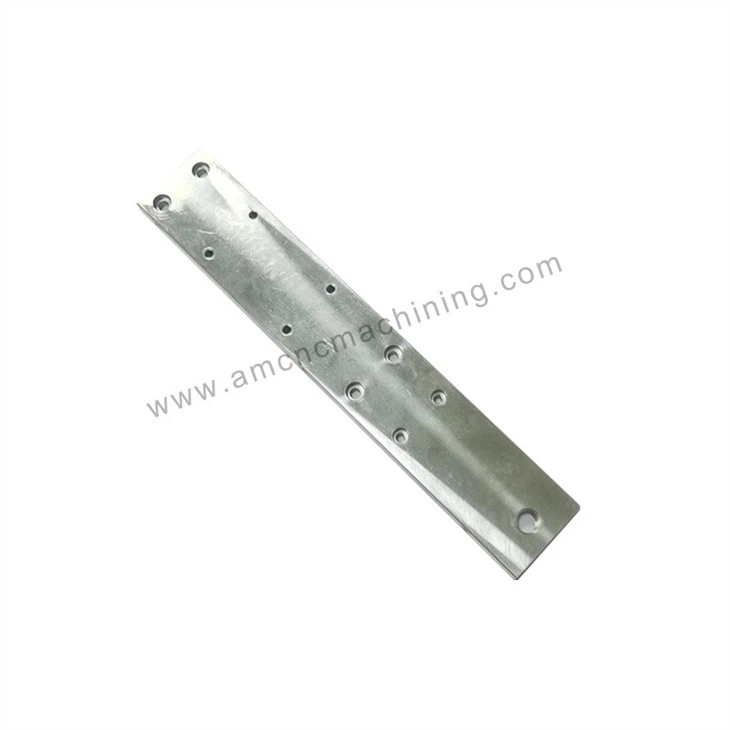
High Speed Aluminum Milling for Complex Parts
When it comes to machining complex parts, High Speed Aluminum Milling is a particularly effective technique. Aluminum is a lightweight and highly machinable material, making it ideal for applications where weight reduction is important, such as in the aerospace and automotive industries.
High-speed aluminum milling involves using high spindle speeds and feed rates to remove material quickly. This not only reduces machining time but also improves the surface finish of the parts. With the right cutting tools and machining strategies, high-speed aluminum milling can produce complex geometries with excellent precision and quality.
Processes and Techniques for Complex CNC Milling
To achieve complex geometries in CNC milling, several processes and techniques are employed. One such technique is multi-axis machining. Traditional CNC milling machines typically operate in three axes (X, Y, and Z). However, multi-axis machines, such as 4-axis and 5-axis mills, can move the cutting tool in additional directions. This allows for the machining of parts with undercuts, angled surfaces, and complex contours that would be difficult or impossible to achieve with 3-axis machines.
Another important aspect is the use of advanced CAD/CAM (Computer-Aided Design/Computer-Aided Manufacturing) software. CAD software is used to design the part, while CAM software generates the toolpaths for the CNC milling machine. These software packages allow for the simulation of the machining process, enabling the identification and correction of potential issues before actual machining begins. This helps to ensure the accuracy and quality of the final part.
Limitations and Challenges
While CNC milling is capable of producing complex geometries, there are some limitations and challenges to consider. One of the main limitations is the size of the part. Larger parts may require more powerful machines and longer machining times. Additionally, extremely complex geometries may require multiple setups and operations, which can increase the cost and lead time of production.
Another challenge is the choice of material. Some materials, such as hardened steels and exotic alloys, can be difficult to machine due to their high strength and hardness. Specialized cutting tools and machining strategies may be required to achieve the desired results.
Quality Assurance in Complex CNC Milling
Quality assurance is crucial when producing CNC milling parts with complex geometries. At our company, we have a comprehensive quality control system in place to ensure that every part meets the highest standards. This includes using advanced metrology equipment, such as coordinate measuring machines (CMMs), to verify the dimensions and geometries of the parts.
We also conduct in-process inspections to detect any potential issues early in the manufacturing process. This helps to minimize the risk of producing defective parts and ensures that the final products are of the highest quality.
CNC Milling Machining Products with Complex Geometries
Our CNC Milling Machining Products portfolio includes a wide range of parts with complex geometries. From small, intricate components for electronics to large, structural parts for industrial applications, we have the expertise and capabilities to meet the diverse needs of our clients.
Whether it's a custom-designed part or a standard component with a complex shape, we work closely with our clients to understand their requirements and provide the best possible solutions. Our team of experienced engineers and machinists uses the latest technology and techniques to ensure that every part is produced with precision and quality.
Precision Mechanical Parts with Complex Geometries
In addition to our general CNC milling products, we also specialize in Precision Mechanical Parts with complex geometries. These parts are used in a variety of industries, including robotics, automation, and consumer electronics.
Precision is of utmost importance in these applications, and our state-of-the-art CNC milling machines and quality control processes ensure that our parts meet the tightest tolerances. We use advanced materials and cutting-edge manufacturing techniques to produce parts that are not only accurate but also durable and reliable.
Conclusion
In conclusion, CNC milling is a highly effective method for producing parts with complex geometries. With the advancements in technology, including multi-axis machining, high-speed milling, and advanced CAD/CAM software, the capabilities of CNC milling have expanded significantly. However, it's important to be aware of the limitations and challenges involved and to work with a reliable supplier who has the expertise and experience to overcome them.
If you're in need of CNC milling parts with complex geometries, we invite you to contact us for a consultation. Our team of experts will be happy to discuss your requirements and provide you with a customized solution. We look forward to working with you to bring your ideas to life.
References
- "CNC Machining Handbook" by Peter Smid
- "Modern Manufacturing Processes" by Mikell P. Groover
- Industry research reports on CNC milling and complex part manufacturing


