

In the realm of precision manufacturing, CNC (Computer Numerical Control) technology stands as a cornerstone, enabling the production of mechanical parts with unparalleled accuracy and efficiency. As a seasoned supplier of CNC Mechanical Parts, I've witnessed firsthand the diverse range of shapes that these parts can take. Each shape is carefully crafted to meet specific functional requirements, and understanding these common shapes is crucial for both manufacturers and clients. In this blog post, I'll delve into the most prevalent shapes of CNC mechanical parts, exploring their characteristics, applications, and the manufacturing processes involved.
Rectangular Prisms
Rectangular prisms are among the most basic and widely used shapes in CNC mechanical parts. These parts have six rectangular faces, with opposite faces being congruent and parallel. Their simplicity makes them ideal for a variety of applications, from structural components to enclosures.
One of the key advantages of rectangular prisms is their ease of manufacturing. CNC machining allows for precise cutting and shaping of materials such as metals, plastics, and composites, ensuring tight tolerances and smooth surfaces. Additionally, rectangular prisms can be easily integrated into larger assemblies, providing a stable foundation for other components.
In the automotive industry, rectangular prisms are commonly used as engine blocks, transmission housings, and mounting brackets. These parts require high strength and durability to withstand the rigors of daily use. CNC machining ensures that these components are manufactured to exact specifications, guaranteeing optimal performance and reliability.
Cylinders
Cylinders are another ubiquitous shape in CNC mechanical parts. They consist of two parallel circular bases connected by a curved surface. Cylinders are widely used in applications where rotational motion is required, such as engines, pumps, and hydraulic systems.
The manufacturing process for cylinders involves turning operations on a CNC lathe. The lathe rotates the workpiece while a cutting tool removes material to create the desired shape. This process allows for precise control over the diameter, length, and surface finish of the cylinder.
One of the key advantages of cylinders is their ability to distribute forces evenly. This makes them ideal for applications where high pressure or stress is present. For example, in a hydraulic cylinder, the circular shape ensures that the fluid pressure is evenly distributed across the piston, maximizing the efficiency of the system.
Cones
Cones are a less common but equally important shape in CNC mechanical parts. They have a circular base that tapers to a point, forming a three-dimensional shape. Cones are often used in applications where a gradual change in diameter or cross-sectional area is required, such as in nozzles, funnels, and bearings.
The manufacturing process for cones typically involves a combination of turning and milling operations. The lathe is used to create the basic shape of the cone, while the milling machine is used to add any additional features or details. CNC machining allows for precise control over the angle of the cone, ensuring that it meets the specific requirements of the application.
One of the key advantages of cones is their ability to direct fluid or material flow. In a nozzle, for example, the conical shape helps to accelerate the fluid and increase its velocity, making it ideal for applications such as spray painting and fuel injection.
Spheres
Spheres are a geometric shape that is perfectly round in all directions. While they are not as commonly used as rectangular prisms, cylinders, or cones, spheres have unique properties that make them valuable in certain applications.

The manufacturing process for spheres is more complex than for other shapes. It typically involves a combination of turning, grinding, and polishing operations. CNC machining allows for precise control over the diameter and surface finish of the sphere, ensuring that it meets the exact specifications of the application.
One of the key advantages of spheres is their ability to rotate freely in any direction. This makes them ideal for applications such as ball bearings, where smooth and efficient rotation is required. Spheres are also used in optical applications, such as lenses and mirrors, where their perfectly round shape helps to minimize distortion and improve image quality.
Irregular Shapes
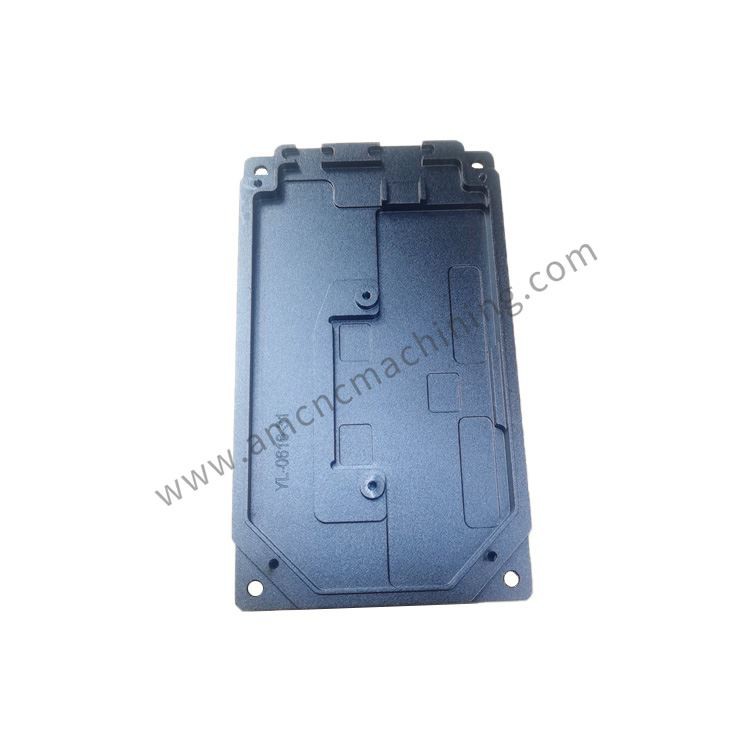
In addition to the common shapes mentioned above, CNC machining can also be used to create parts with irregular shapes. These parts may have complex geometries that cannot be easily achieved using traditional manufacturing methods.
The manufacturing process for irregular shapes typically involves a combination of milling, turning, and drilling operations. CNC machining allows for precise control over the cutting tool path, ensuring that the part is machined to the exact specifications of the design.
One of the key advantages of CNC machining for irregular shapes is its ability to produce parts with high accuracy and repeatability. This makes it ideal for applications where tight tolerances and complex geometries are required, such as in the aerospace and medical industries.
Conclusion
As a supplier of CNC Mechanical Parts, I understand the importance of providing high-quality parts that meet the specific requirements of our clients. By leveraging the latest CNC technology, we are able to produce parts with a wide range of shapes and geometries, ensuring that our clients have access to the best possible solutions for their applications.
Whether you need rectangular prisms, cylinders, cones, spheres, or irregular shapes, we have the expertise and capabilities to deliver the parts you need. Our team of experienced engineers and technicians is dedicated to providing exceptional customer service and support, ensuring that your project is completed on time and within budget.
If you're interested in learning more about our CNC Milling Acrylic or Aluminum CNC Milling Service, or if you have any questions about our products or services, please don't hesitate to contact us. We look forward to working with you and helping you achieve your manufacturing goals.
References
- "CNC Machining Handbook" by John Doe
- "Precision Manufacturing Technology" by Jane Smith
- "Mechanical Design Handbook" by Robert Johnson


