Why Choose Us
Professional team
Our team of skilled machinists and engineers has years of experience in CNC machining and specializes in creating custom metal parts to your exact specifications.
Advanced equipment
We invest in the latest CNC technology to ensure that your custom metal parts are crafted with the utmost precision, accuracy, and efficiency.
Customized services
With our experience we understand that every project is unique. Our CNC services can be tailored to your specific requirements, from intricate designs to complex geometries.
Long warranty
We maintain stringent quality control standards to guarantee that your custom metal parts meet or exceed your expectations. Our commitment to quality is unwavering.
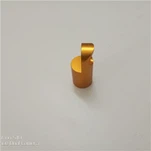
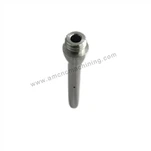
Aluminum machined components are precision components made from aluminum using computer numerical control (CNC) turning technology. Aluminum is a lightweight, durable, and corrosion-resistant material that is widely used in various industries. With CNC turning, aluminum parts can be produced with high accuracy and consistency, ensuring their quality and reliability. Common examples of aluminum CNC turning parts include shafts, flanges, fittings, and valves. These parts can be made with intricate designs and tight tolerances, allowing for precise fit and function in the final product.

CNC Precision Turning Components
These CNC Precision Turning Components are famous for their excellent precision and strict tolerance, which can ensure consistent and accurate dimensions according to design specifications.

Aluminum Precision Turned Components
These Aluminum Precision Turned Components refer to the precision engineering parts made of aluminum by CNC turning technology. They remove materials from cylindrical workpieces during production to form the required shapes and features of parts, ensuring strict tolerances and accurate dimensions meet design specifications.

The CNC Machining Acrylic is a transparent and durable plastic, which is widely used in various industries because of its optical transparency and versatility. Through numerical control machining, this part can realize complex and accurate cutting, carving and contour, so that it can meet the needs of display, lighting, automobile and other industries.

Acrylic polymers are currently one of the most widely used plastics on the market. Because acrylic materials can be used in many different industrial fields, acrylic materials are popular in the manufacturing industry, especially CNC acrylic processing.

These CNC Aluminium Turned Parts are usually produced by solid aluminum bars using CNC lathes, which are non-magnetic and can be processed into any required shape for milling or turning parts.

Acoin can provide cost-effective CNC lathe services for large-scale projects, and provide high-precision, high-precision quality products.

CNC Milling And Turning Services
The CNC Milling and Turning Services is a process used in manufacturing industry to improve the accuracy, speed and efficiency of processing parts. It uses computer numerical control (CNC) machines to cut and mold different types of materials, such as metal, plastic and wood, which can improve the accuracy and consistency of the final product.

CNC Lathe Machine Parts Service
CNC lathe machine parts service is an ideal product for commercial enterprises such as metal processing, manufacturing, aerospace, medical, oil and gas, automotive, agriculture, and more. Our products offer a high level of precision, versatility, and customization, making them an investment that is sure to pay off in the long run.

CNC Turning Component Services
With the development of product manufacturing technology, manual processing has gradually begun to be replaced by automated production and processing. Automated processing is more widely used in large-scale industries that require high production speed and high production precision.
Excellent Strength-to-Weight Ratio
The demand for aluminum parts has increased over the years, owing to its high strength-to-weight ratio. The material possesses high strength, and yet is lightweight. Both these properties make it an ideal choice for building critical parts in the automotive and aerospace industries.
Easily Machinable
Aluminum is a strong material, but it chips easily which makes it easy to convert it into the desired shape. The material can withstand the rigors of folding, punching, and drilling conducted during CNC machining, without losing its material properties. Owing to its easy-to-shape property, the energy required to machine aluminum is much lesser compared to other materials such as steel, titanium, and so on.
Highly Customizable
Aluminum can be easily customized to meet typical application requirements. CNC machined parts can be cosmetically enhanced or finished to desired specifications. For instance, they can be plated with colors including green, black, blue, or any other desired color.
Can Withstand Temperature Variations
Steel and aluminum have been popular for several years. These metals offer peculiar benefits which make them an ideal choice for various industrial applications. Of these two, steel is most favored when it comes to durability. However, steel is not the right choice if temperature variations are involved. For instance, steel cannot withstand high welding temperatures or extremely low temperatures. However, aluminum can withstand both these conditions efficiently.
Recyclable
Aluminum parts are easily recyclable, which has contributed to their increasing use in industrial applications. Thus, CNC machined aluminum parts are an ideal choice for businesses looking for ways to reduce their carbon footprint. As known, CNC machining is a subtractive process, where lots of material waste is created due to chipping. The material waste can be recycled to create a better product.
Anti-Corrosive
CNC machined parts made of aluminum are used in various applications where they are exposed to corrosive elements. Aluminum offers relatively good resistance to corrosion; however, their capabilities of corrosion resistance differ across grades. For instance, grade 6061 is known to offer excellent corrosion resistance.
Excellent Electrical Conductivity
CNC machined aluminum parts are also used in electrical applications, because they have good electrical conductivity. Although aluminum may not have the same level conductivity as that of copper, it is better than steel or other widely machined materials.
Types of Aluminum Machined Components
Structural parts: These parts are used to support other components or assemblies. They are typically made from high-strength aluminum alloys and are often used in the aerospace, automotive, and construction industries.
Machined components: These parts are used in a variety of machines and appliances. They are typically made from high-precision aluminum alloys and are often used in the medical, electronics, and manufacturing industries.
Precision parts: These parts are used in applications where high accuracy and precision are required. They are typically made from high-grade aluminum alloys and are often used in the aerospace, medical, and defense industries.
Formed parts: These parts are made by shaping aluminum sheet metal or plate. They are typically used in a variety of applications, such as automotive, appliance, and furniture manufacturing.
Cast parts: These parts are made by pouring molten aluminum into a mold. They are typically used in applications where high strength and durability are required.
Extruded parts: These parts are made by forcing molten aluminum through a die. They are typically used in applications where long, straight sections are required.
Material of Aluminum Machined Components


Al-2007 Series
The main alloying element in this series is copper with a 4-5% rate. It is a durable, light and highly functional short chip alloy. It is also suitable for indention, heat treatment and high-speed processing. Thus the Al-2007 series machine parts can be used to produce bolts, rivet nuts, screws and threaded rods. However, this alloy contains a low weldability and corrosion resistance rate. That is why protective anodizing is recommended after the processing.
Al-5083 Series
This series, which is not heat-treated, is renowned for its resistance to harsh conditions. Containing a ratio of 4-5% of magnesium with a small amount of chromium and manganese, the alloy is mainly used in maritime and chemical applications thanks to its high corrosion and abrasion resistance. It is not recommended for use in high-temperature applications.
Al-5754 Series
This alloy has a magnesium ratio of 2.5-3.5%, making it the alloy with the highest aluminium ratio. The Al-5654 series is a rollable, wrought and extrudable alloy. Cold working can be done to increase the endurance of this non-heat treated series. Like the 5083 series, it has high durability and corrosion resistance rate. Given these properties, it can be understood why the 5457 is one of the most popular aluminium alloys used in CNC machining. It is usually used in welded constructions, flooring applications, fishing equipment, vehicle bodies, food processing and rivets.
Al-6060 Series
The 6060 series is generally used in the construction/architecture, food processing, medical equipment and automotive industries. It is a wrought aluminium alloy containing magnesium and silicon. This heat-treatable alloy has a medium durability rate. It can be welded and formed quite nicely. It is also highly resistant to corrosion, and it can be amplified by way of anodizing.
Al-6061 Series
It is an alloy that contains magnesium, silicon and traces of copper. Its tensile strength of 180 MPa is very suitable for highly loaded structures such as wharfage, railway wagon parts, machinery, and aviation parts.
Al-6082 Series
Processed with rolling and extrusion, it's an alloy with an average durability ratio, high weldability and high corrosion resistance. It is commonly used in container parts, shipbuilding and bridges.
Al-7075 Series
This series that contains zinc as its main alloying element has average machinability and low weldability but is frequently used in military and aviation industries, climbing equipment and nuclear applications with its high strength and excellent resistance in atmospheric and marine environments.
Application of Aluminum Machined Components
Construction Industry
Buildings are synonymous with the construction industry. And buildings stay corrosion-free due to the use of aluminum. It is helpful in the design and development of projects that are well suited to modern needs. In the construction, industry aluminum is found in many forms, in the form of sections, in the form of rolled-formed products and solid forms. The aluminum surface is beautiful and needs no cleanliness. Aluminum is used in exhibition halls, disaster relief rooms, temporary courtyards and more.
Electrical Industry
Aluminum gets manufactured in thin wires and is often used in products like telephone wires and light bulbs. Aluminum's low density makes it an ideal option for long-distance power lines. Aluminum is more ductile enabling it to form more wires easily. In addition to power lines and cables, aluminum is used in appliances, motors and power systems.
Transport Industry
Aluminum provides a combination of strength and lightness making it an ideal choice for the transportation industry. The primary use of aluminum is in automobiles, railways, marines, and airplanes. Using aluminum components can have advantages, as it is easier to form and improves efficiency. The low weight of aluminum means low fuel consumption and emissions.
Aerospace Industry
Aluminum is amazing for aircraft components which makes it too good for the aviation industry. These are high resistance to corrosion, excellent ductility, and a high strength-to-weight ratio. It takes off any pressure that is involved in high-altitude flying. The most popular grades of aluminum that are used in the aerospace industry are:
● Aluminum 7075
● Aluminum 6061
Consumer Good Industry
The consumer goods industry is the one that is relying on the consumption of aluminum CNC machined parts. You might be reading this article on a device, a smartphone or your laptop. Every new model of electronics is coming with an aluminum body and components. Aluminum is stronger than plastic which allows the material to absorb and dissipate the heat.
Properties of Aluminum Machined Components
Ductility and malleability
As a highly malleable metal, aluminum is easily machined and relatively easy to shape and drill.
Versatility
There are a myriad of grades of aluminum and aluminum alloys, each designed with specific characteristics to meet differing needs.
Resistances
Aluminum features a variety of excellent resistances to corrosion and most chemicals. When exposed to air, a thin, protective layer of oxidation forms on the surface of the metal, protecting it from further oxidation. Aluminum is also highly resistant to harsh chemicals, including most acids.
Strength-to-weight ratio
Aluminum's high strength-to-weight ratio makes it an ideal material for transportation applications. Aluminum alloys have the strength and durability needed for critical components, while the metal's light weight reduces fuel consumption and emissions.
Conductivity
Aluminum has excellent thermal and electrical conductivity properties. Aluminum is commonly used for major power transmission lines and is an excellent material for heat sink applications, such as computers, that require heat to be drained away rapidly. Aluminum is also a good reflector of heat and visible light, making it useful in lighting applications.
Non-toxic
Aluminum is a non-toxic, odorless metal, which makes it popular for use in pharmaceutical and food production.
CNC Machining Processes for Aluminum Machined Components
Process
CNC Milling uses rotating cutting tools to remove material from a workpiece, creating various features like slots, pockets, contours, and flat surfaces. It can be done on 3-axis or 5-axis machines, with the latter offering greater flexibility for complex shapes.
Applications
Creating intricate parts with multiple features for various industries, including aerospace, automotive, medical, and electronics. Machining large, flat components like plates and frames. Producing prototypes and small batches of custom parts.
Process
CNC Turning uses a single-point cutting tool to remove material from a rotating workpiece, typically cylindrical or bar stock. It creates features like internal and external threads, diameters, grooves, and tapers.
Applications
Manufacturing high-precision cylindrical parts like shafts, gears, and bushings. Producing large quantities of identical parts efficiently. Creating parts with internal threads and complex profiles.
Hole Drilling
- Process: CNC drilling uses drill bits to create various-sized holes for assembly purposes, fasteners, or other functional applications.
- Applications: Drilling precise holes for bolts, rivets, and dowels Creating channels for fluid flow or cooling purposes. Adding access points for other machining processes.
Tapping
- Process: Tapping uses threaded tools to create internal threads in drilled holes, allowing for screw attachments.
- Applications: Securing components with threaded fasteners for assembly. Creating ports for pipes and fittings. Adding connection points for electrical components.
1. Cleaning
Cleaning is the cornerstone of maintaining aluminum machining components. Dirt, debris, and other contaminants can accumulate on the surfaces and crevices, leading to corrosion and wear.
Use Mild Cleaners: Harsh chemicals can damage aluminum. Use mild, non-abrasive cleaners specifically designed for aluminum.
Avoid Abrasive Tools: Clean the components with soft cloths or brushes, avoiding steel wool or other abrasive tools that can scratch the surface.
Rinse Thoroughly: Ensure all cleaning agents are thoroughly rinsed off to prevent residue buildup.
2. Corrosion Prevention
While aluminum is naturally corrosion-resistant, certain conditions can still lead to corrosion.
Anodizing: This process creates a protective oxide layer on the surface, enhancing corrosion resistance.
Protective Coatings: Applying a protective coating, such as paint or powder coating, can provide an additional barrier against corrosive elements.
Regular Inspections: Frequently inspect the components for signs of corrosion and address any issues immediately.
3. Proper Storage
Storage conditions play a significant role in maintaining the integrity of aluminum machining components.
Dry Environment: Store components in a dry environment to prevent moisture-induced corrosion.
Temperature Control: Avoid extreme temperatures, which can cause the material to expand or contract, leading to stress and potential damage.
Protective Wrapping: Use protective wrapping or covers to shield the components from dust and debris.
4. Lubrication
Lubrication is essential to reduce friction and wear, especially in moving components.
Use Appropriate Lubricants: Choose lubricants compatible with aluminum and the specific application of the components.
Regular Application: Apply lubricants regularly to ensure smooth operation and prevent metal-to-metal contact.
Check for Residue: Ensure that lubricants do not leave a sticky residue that can attract dirt and debris.
5. Regular Inspections
Routine inspections help identify potential issues before they become significant problems.
Visual Inspections: Regularly inspect the components for visible signs of wear, corrosion, or damage.
Dimensional Checks: Use precision instruments to check for dimension deviations, ensuring the components remain tolerable.
Functional Testing: Perform functional tests to ensure the components operate as expected under normal conditions.
6. Addressing Wear and Tear
Even with the best care, aluminum machining components will experience wear and tear over time.
Timely Repairs: Address any signs of wear immediately to prevent further damage.
Replacement: Replace components that are beyond repair to maintain the overall performance of your machinery.
Upgrades: Consider upgrading to newer, more durable components if they become available.
Our Factory
We were established in 2012. We specialize in manufacturing various metal parts according to customer requirements. Over the years, we have grown into a manufacturer of spare parts and metal parts, which are used in automobiles, furniture, electrical equipment, medical treatment, sanitary ware and construction. industry. With our long-term experience, we are a well-known reliable manufacturer in the CNC machining industry. And trusted by domestic and foreign entrepreneurs, we have a group of professional technicians and advanced production equipment to produce high-quality products, such as steel, copper, brass, stainless steel, aluminum, etc.

Ultimate FAQ Guide to Aluminum Machined Components
Q: How to clean machined aluminum parts?
Q: Which type of cleaning solution should be used on aluminum parts?
Q: What is the best chemical to clean aluminum with?
Q: What is machined aluminum?
Q: What is the difference between cast and machined aluminum?
Q: What is the difference between forged and machined aluminum?
Q: How can you tell the difference between aluminum and cast aluminum?
Q: How do you clean machined aluminum?
Q: What are the advantages of aluminum material?
Q: Why is aluminum good for machining?
Q: Is machined aluminum stronger than cast aluminum?
Q: What do I need to know about CNC machining?
Q: Are CNC machines hard to learn?
Q: Is there a lot of math in CNC machining?
Q: Why is aluminium preferred for manufacturing?
Q: What is stronger forged or machined?
Q: Why are forged parts better?
Hot Tags: aluminum machined components, China aluminum machined components manufacturers, suppliers, factory, simple operation cnc parts service, cnc plasma parts, Customized Combined Precision Components, cnc punching parts service, cnc brass parts, cnc machining aerospace parts