


We were established in 2012. We specialize in manufacturing various metal parts according to customer requirements. Over the years, we have grown into a manufacturer of spare parts and metal parts, which are used in automobiles, furniture, electrical equipment, medical treatment, sanitary ware and construction. industry. With our long-term experience, we are a well-known reliable manufacturer in the CNC machining industry. And trusted by domestic and foreign entrepreneurs, we have a group of professional technicians and advanced production equipment to produce high-quality products, such as steel, copper, brass, stainless steel, aluminum, etc.
Why Choose Us
Our Factory
We were established in 2012. We specialize in manufacturing various metal parts according to customer requirements. Over the years, we have grown into a manufacturer of spare parts and metal parts, which are used in automobiles, furniture, electrical equipment, medical treatment, sanitary ware and construction. industry.
Rich Experience
With our long-term experience, we are a well-known reliable manufacturer in the CNC machining industry. And trusted by domestic and foreign entrepreneurs, we have a group of professional technicians and advanced production equipment to produce high-quality products, such as steel, copper, brass, stainless steel, aluminum, etc.
Our Product
We provide CNC machining service.For example:
Aluminium CNC Milling Parts
Metal Milling Service
CNC Milling Acrylic
Precision Prototyping Machining
CNC Lathe Turning Machining
Stainless Steel Turned Parts
Our Service
We can provide you with high-quality products and actively respond to your inquiries. At the same time, our team members are omnipotent and have accumulated professional and rich experience in CNC operation, and will provide you with consultation and feedback to meet your requirements to the greatest extent.


Aluminum Precision Turned Components
Conducive to better shaping of the product.
The resulting product has a stable appearance and good compressive strength. Have good plasticity. Corrosion resistance and oxidation resistance.

CNC Machining Acrylic Acoin's advantages in CNC processing acrylic materials As a professional CNC prototype manufacturer and factory supplier, we are well-known for processing materials such as aluminum, stainless steel, brass, and plastic in addition to plastic and acrylic.

Acrylic CNC Service Acrylic polymers are currently one of the most widely used plastics on the market. Because acrylic materials can be used in many different industrial fields, acrylic materials are popular in the manufacturing industry, especially CNC acrylic processing.

In order to meet the different requirements and needs of various industries, we can provide a full range of CNC aluminum parts. Aluminum can be used for CNC parts in a short delivery time, the product will be more economical overall, and it is a wise choice for most customers.
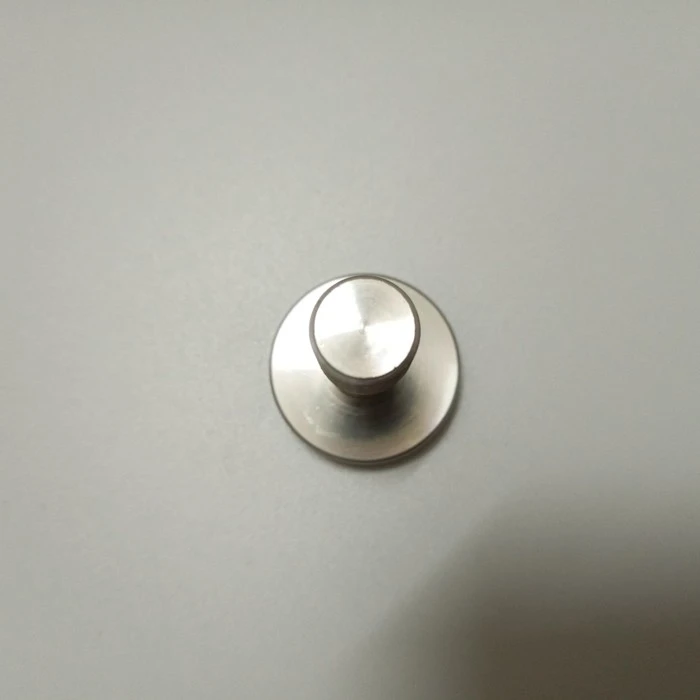
CNC turning provides a higher level of accuracy, manufacturers can also reduce waste because they can use their own raw materials to make more products.

The high-precision processing equipment factory fully supports the manufacturing of precision parts.

We are a professional manufacturer of hardware OEM parts, which can produce products including auto lathe parts, CNC parts, standard PEM, nuts, studs, shafts and other products.

6061 is a medium-high strength, heatable and durable material. This material is mainly composed of aluminum, magnesium and silicon.
Aluminum is a good material for mechanical machining because it is easy to work with and has a high strength-to-weight ratio. The mechanical properties are influenced by the kind of alloy, heat treatment, and manufacturing process. Aluminum alloys fall into two categories: cast alloys and wrought alloys. Cast alloys are made by pouring molten aluminum into a mold, whereas wrought alloys are created by rolling, extrusion, or forging. Wrought metals are advised for machining because they are often stronger than cast alloys.
Advantages of Aluminium Machining Parts
Machinability
Engineers prefer aluminium for machined parts for various reasons, one of which is that the material is simple to machine. Aluminium can be cut rapidly and accurately with CNC machine tools because it chips easily and is easy to shape. This has several crucial implications: First, the short duration of the machining task reduces the cost of the process (due to the machinist's reduced labour and the machine's reduced running time); second, good machinability means less deformation of the part as the cutting tool passes through the workpiece. This may enable the machine to satisfy tighter tolerances, resulting in increased accuracy and precision.
Corrosion resistance
The ability to survive oxidation and chemical damage - varies significantly between aluminium types. Fortunately, some of the most popular CNC machining grades are also the toughest and other alloys on the lower end of the strength spectrum; parts made of aluminium have great corrosion resistance.
Strength-to-weight ratio
Aluminium has physical qualities that make it perfect for mechanical and aesthetic components. The metal's great strength and lightweight are two of the essential characteristics, making it ideal for vital parts used in the aerospace and automotive industries. Parts that can be successfully machined using aluminium include aircraft fittings and automotive shafts.
Various grades of aluminium, on the other hand, serve different purposes. General-purpose grades like 6061 can be utilised for many parts due to their favourable strength-to-weight ratio, whereas aerospace and marine applications may prefer high-strength grades like 7075.
Recyclability
Another advantage of aluminium is its high recyclability, making it ideal for companies looking to lessen their environmental effect or wish to cut down on waste and recoup some of their costs. In CNC machining, where there is a lot of waste material in the form of chips from the cutting tool, recyclable materials are very significant.
What Are the 5 Ways to Fabricate Aluminum Parts


Machining a full block or bar
This is the most straight forward ways of processing aluminum. A block of aluminum is mounted to a milling machine. Or, a bar is processed with a turning machine. The principle of both ways is to cut chips of metal with a cutting tool in order to obtain the desired shape of the product. In case of a milling machine, the cutting tool is rotating. Where as with a turning machine it is the product that rotates. Machining of aluminum parts allows fast cutting speeds. When there is good liquid cooling, the surface of the part will be nice. However, there will often be a difference in surface roughness depending on the feed direction compared to the rotation direction of the tool. Did you know that alcohol is a very good cooling agent to cut aluminum ? It makes the processed surface shiny.
The advantage is that almost any shape can be machined. However, we need to turn and clamp the part to process each surface. Unless we use a 5-axis CNC machine. And there is a lot of wasted material, which has an impact on the unit cost.
Aluminum extrusion
Extrusion is a process to make half fabricates. A bar of aluminum is heated to the deforming temperature. A piece of about 500 millimeter is cut of. This piece is put into the feeder of the extrusion machine. Next, the aluminum is pressed with high force through an extrusion mold, made of hardened steel. The result is a long piece of aluminum with the desired section of the product. Those pieces are usually 12 meters long. After extrusion, the strips are pulled to make the straight.
Now, the long pieces are cut to the desired length of the final product. In most cases the product still needs to be machined.
The advantage of extruded aluminum products is that there is a large reduction of wasted material in order to obtain the final part. However, the section of the product is fixed and the number of integrated features is limited.
Sheetmetal
Sheetmetal processing is a different way of 5 ways to fabricate aluminum parts. We start from a thin sheet of aluminum. Next the aluminum must be cut into the correct shape. Cutting of aluminum is done with a laser cutting machine, with a punching machine or with a press. There are flat sheetmetal parts and bended products. Bending of the aluminum sheets happens with a bending machine but also with punching machines and presses.
Molding and casting
There are different ways of molding aluminum parts. We can do injection molding where liquid aluminum is injected under high pressure into an injection mold. The result is a part with almost all desired features present after it comes out of the mold. This technique is suitable for production large quantities, because the injection mold is relatively expensive. The mold cost is a lot cheaper with sand casting but you have to accept the rougher shape and surface of the produce. There are bigger tolerances and the material is more brittle because of the casting under low pressure. In most cases the casted aluminum parts still need machining of certain features. Cavities with narrow tolerances are machined by CNC. Threaded holes are drilled and tapped after molding. Casted aluminum parts are not suitable for anodizing. Therefore they are usually powder coated.
Aluminum forging
Forging of aluminum parts is another way to reduce scrap material. We literally press a block of material between a positive and negative side of a hard steel mold. We us a large press with a pressure of 5 tons. The result is an perfectly shaped part. Just like with the other molding process, we machine burrs, holes and threaded holes afterwards to obtain a more accurate product. Aluminum products processed with a press are suitable for anodizing because the material structure is similar to extruded aluminum.
Surface Finishing In CNC Machining Aluminum Parts
Surface finishing is a critical aspect of CNC machining that enhances the aesthetic, functional, and performance characteristics of aluminum parts.
Anodizing
Anodizing is an electrochemical process that enhances the corrosion resistance and durability of aluminum parts. The aluminum part is immersed in an electrolytic solution, and an electric current is passed through to stimulate the formation of an oxide layer on the surface. This oxide layer not only provides a protective coating but can also be dyed to achieve various colors. Anodizing is widely used in the aerospace, automotive, and consumer electronics industries.
Polishing
Polishing is a mechanical process that involves the removal of surface imperfections and scratches to achieve a smooth and reflective finish. Various polishing techniques, such as abrasive polishing, buffing, and chemical polishing, can be employed based on the desired level of shine. Polishing is often used for high-end consumer products, decorative components, and parts requiring enhanced visual appeal.
Coating
Coating involves applying a thin layer of material onto the surface of the aluminum part. Common coating types include powder coating, paint, and protective coatings. Powder coating involves applying a dry powder that adheres electrostatically to the surface and is then cured to form a durable finish. Paint provides a versatile option for achieving different colors and finishes. Protective coatings may include anti-corrosive coatings for enhanced durability.
Surface finishing is a critical step in CNC machining aluminum parts, offering benefits ranging from improved aesthetics to enhanced functionality and durability. Anodizing, polishing, and coating are versatile techniques that cater to different requirements, allowing manufacturers to meet diverse application needs across various industries.
What Are The Different Types Of Aluminum Machining Parts
There are many different types of aluminum machining parts, each with its own unique properties and applications. Some of the most common types of aluminum machining parts include:
Structural parts
These parts are used to support other components or assemblies. They are typically made from high-strength aluminum alloys and are often used in the aerospace, automotive, and construction industries.
Machined components
These parts are used in a variety of machines and appliances. They are typically made from high-precision aluminum alloys and are often used in the medical, electronics, and manufacturing industries.
Precision parts
These parts are used in applications where high accuracy and precision are required. They are typically made from high-grade aluminum alloys and are often used in the aerospace, medical, and defense industries.
Formed parts
These parts are made by shaping aluminum sheet metal or plate. They are typically used in a variety of applications, such as automotive, appliance, and furniture manufacturing.
Cast parts
These parts are made by pouring molten aluminum into a mold. They are typically used in applications where high strength and durability are required.
Extruded parts
These parts are made by forcing molten aluminum through a die. They are typically used in applications where long, straight sections are required.
The specific type of aluminum machining part that is used will depend on the specific application and the requirements of the part.
The versatility of custom aluminium CNC parts can be best understood by exploring its pervasive use across different industries. Each sector has unique requirements, and aluminium, with its blend of strength, lightness, and machinability, effectively meets these diverse demands.
Aerospace & Aviation
In the realm of aerospace and aviation, precision and weight are paramount. Aluminium CNC parts cater to this perfectly. Their lightweight nature aids in fuel efficiency and performance, while their strength ensures the components can withstand the rigors of flight. The precise nature of CNC machining also ensures that these parts fit seamlessly into intricate aerospace assemblies.
Automotive Industry
Vehicles, be they traditional or electric, demand durable and lightweight parts. Aluminium CNC components fulfill this requirement, offering optimal weight-to-strength ratios. In the modern automotive world, where efficiency and performance are critical, these parts play a pivotal role, from engine components to chassis elements, ensuring vehicles are both robust and fuel-efficient.
Electronics
Electronics require components that can efficiently dissipate heat while offering protection and durability. Aluminium, with its excellent thermal conductivity, is ideal for crafting heat sinks and cooling solutions. Furthermore, the sleek finish and durability of aluminium CNC parts make them perfect for external enclosures, giving gadgets both a premium look and longevity.
Medical Devices
The medical sector demands precision and reliability, and aluminium CNC parts are up to the task. Whether it's surgical instruments that require pinpoint accuracy or prosthetic elements that must be both lightweight and strong, aluminium is the go-to material. Its corrosion resistance also ensures hygiene, a crucial aspect of medical applications.
Robotics & Automation
Robots and automated systems operate in diverse environments, performing various tasks. They require components that are reliable, durable, and adaptable. Given their strength and malleability, aluminum CNC parts are often integral in these systems. Whether it's a robot's arm or the gears in an automated assembly line, these parts ensure smooth, efficient operations.
Design Considerations for Aluminum Machining Parts
The first consideration when designing aluminum machining parts is material selection. There are many different types of aluminum alloys available, each with their own unique properties. Some of the most common aluminum alloys used in machining include 6061, 2024, and 7075.
When selecting an aluminum alloy for machining, it's important to consider factors such as strength, machinability, and cost. 6061 aluminum is a commonly used alloy due to its high strength and good machinability. However, it can be more expensive than other aluminum alloys. 2024 aluminum is another commonly used alloy due to its high strength-to-weight ratio, but it can be more difficult to machine. 7075 aluminum is a high-strength alloy that is often used in aerospace and military applications, but it can be more expensive than other aluminum alloys.
The next consideration when designing aluminum machining parts is part geometry. Aluminum parts can be manufactured in a variety of shapes, including cylindrical, prismatic, and complex shapes. When designing part geometry for machining, it's important to consider the need for fixturing and the ability to access difficult-to-reach areas.
For example, when machining a cylindrical part, it's important to consider the length-to-diameter ratio of the part. Parts with a high length-to-diameter ratio may require additional support or specialized fixturing to prevent deflection during machining. Prismatic parts may require additional consideration for clamping and fixturing to ensure that they remain stable during machining. Complex shapes may require multi-axis machining or specialized fixturing to ensure that all areas of the part can be reached during machining.
Tolerances are an important consideration when designing aluminum machining parts. Tolerances refer to the allowable deviation from the desired dimensions of a part. When setting tolerances for aluminum parts, it's important to consider the machining process used and the requirements of the final product.
For example, some machining processes, such as milling, may be able to achieve tighter tolerances than others, such as turning. Additionally, the requirements of the final product may dictate the tolerances that are necessary. For example, a part that will be used in a high-precision application, such as a medical device, may require tighter tolerances than a part that will be used in a less critical application, such as a consumer product.
Surface finish is another important consideration when designing aluminum machining parts. Surface finish refers to the texture or appearance of the surface of a part. There are many different surface finishes that can be applied to aluminum parts, including anodizing, polishing, and powder coating.
When selecting a surface finish for aluminum parts, it's important to consider the requirements of the final product and the desired aesthetic appearance. Anodizing can be used to improve the corrosion resistance of aluminum parts, while polishing can be used to create a smooth, reflective surface. Powder coating can be used to create a durable, long-lasting finish that is resistant to scratches and chips.
The final consideration when designing aluminum machining parts is machining parameters. Machining parameters refer to the cutting speed, feed rate, and depth of cut used during the machining process. When selecting machining parameters for aluminum parts, it's important to consider the material being machined, the desired surface finish, and the available machining equipment.
For example, different aluminum alloys may require different machining parameters due to their unique properties. Additionally, the desired surface finish of the part may dictate the use of specific machining parameters. Finally, the available machining equipment may limit the range of machining parameters that can be used.
It's also important to note that optimizing machining parameters for aluminum parts can help to reduce machining time, increase tool life, and improve surface finish. For example, increasing the cutting speed may help to reduce machining time, while decreasing the feed rate may help to improve surface finish.
FAQ
Hot Tags: aluminium machining parts, China aluminium machining parts manufacturers, suppliers, factory, parts made by cnc machine, cnc machining plastic production, Aluminium Machining Parts, aerospace parts cnc machining, Machining 304 Stainless Steel suppliers, precision cnc machining parts


