

Hey there! As a supplier in the field of CNC Precision Milling, I've got a ton of hands - on experience with the post - processing steps for CNC precision - milled parts. In this blog, I'm gonna walk you through the common post - processing steps that we usually carry out to make sure our parts meet the highest standards.
First off, let's talk about cleaning. After the CNC milling process, parts are often covered in metal shavings, coolant, and oil. These residues can affect the part's performance and appearance. So, cleaning is a must - do step. We typically use ultrasonic cleaners, which work like a charm. The ultrasonic waves create tiny bubbles in a cleaning solution, and when these bubbles collapse, they generate a high - energy shockwave that can remove even the tiniest particles from the part's surface. It's super effective and can clean parts with complex geometries that would be hard to clean by hand. You can check out our CNC Milled Parts Service to see how we handle the cleaning process for different types of parts.
Next up is deburring. During the milling process, sharp edges and burrs are often formed on the parts. These burrs can not only be a safety hazard but also affect the part's fit and function. We use various methods to remove burrs. For small burrs, we might use hand tools like files and sandpaper. But for more precise and consistent deburring, we rely on automated deburring machines. These machines can be programmed to deburr specific areas of the part, ensuring that every part comes out with smooth edges. Our CNC Milling Machine Components are carefully deburred to guarantee optimal performance.

Surface finishing is another crucial post - processing step. The surface finish of a part can impact its corrosion resistance, friction coefficient, and overall appearance. There are several surface finishing techniques we use. One of the most common is sandblasting. Sandblasting involves propelling fine particles at high speed onto the part's surface. This can create a uniform matte finish and also remove any remaining impurities. Another popular method is polishing. Polishing can give the part a smooth, shiny surface. We use different grades of abrasive materials to achieve the desired level of polish. For parts that require high - precision surface finishes, we might even use electropolishing, which is a chemical process that can remove a very thin layer of material from the surface, resulting in an extremely smooth finish. Our Precision Prototyping Machining services include a range of surface finishing options to meet your specific requirements.
Heat treatment is also an important step for many CNC precision - milled parts. Heat treatment can improve the part's mechanical properties, such as hardness, strength, and toughness. There are different types of heat treatment processes, like annealing, quenching, and tempering. Annealing involves heating the part to a specific temperature and then slowly cooling it. This can relieve internal stresses and make the part more ductile. Quenching, on the other hand, involves rapidly cooling the part after heating, which can increase its hardness. Tempering is often done after quenching to reduce the brittleness and improve the part's toughness. The choice of heat treatment process depends on the material of the part and its intended application.
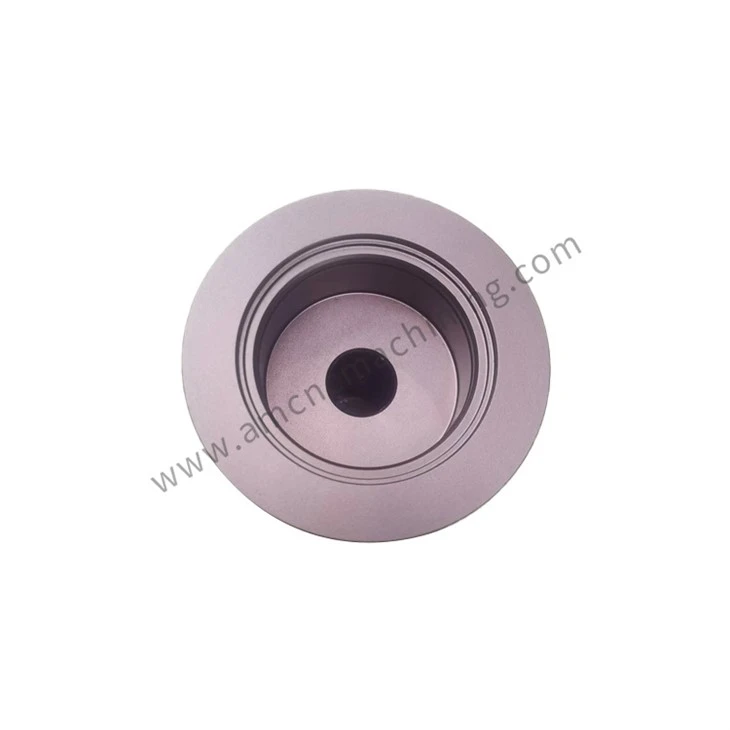
Inspection is a non - negotiable step in the post - processing stage. We need to make sure that the parts meet the required specifications. We use a variety of inspection tools, such as calipers, micrometers, and coordinate measuring machines (CMMs). Calipers and micrometers are used for basic dimensional measurements, while CMMs can provide highly accurate 3D measurements of the part's geometry. We also perform visual inspections to check for any surface defects, such as cracks or scratches. Only after passing all the inspections can the parts be considered ready for delivery.
Coating is another post - processing option that we offer. Coating can provide additional protection to the part, such as corrosion resistance or wear resistance. There are different types of coatings available, like electroplating, powder coating, and PTFE coating. Electroplating involves depositing a thin layer of metal onto the part's surface, which can improve its conductivity and corrosion resistance. Powder coating is a dry finishing process where a powder is applied to the part and then heated to form a hard, durable finish. PTFE coating, also known as Teflon coating, can reduce friction and make the part more resistant to chemicals.
Assembly is sometimes required for CNC precision - milled parts. If the parts are part of a larger assembly, we make sure that they fit together perfectly. We use precision fixtures and alignment tools to ensure accurate assembly. This step requires careful planning and attention to detail to make sure that the final product functions as intended.
Now, I know all this might seem a bit technical, but it's all about making sure that the parts we produce are of the highest quality. Whether you need a single prototype or a large - scale production run, we've got the expertise and equipment to handle it. If you're interested in our CNC precision - milling services, don't hesitate to reach out for a quote or to discuss your project in more detail. We're always happy to work with you to find the best solutions for your needs.
In conclusion, the post - processing steps for CNC precision - milled parts are just as important as the milling process itself. From cleaning and deburring to surface finishing, heat treatment, inspection, coating, and assembly, each step plays a crucial role in ensuring the quality and performance of the final product. So, if you're in the market for high - quality CNC milled parts, give us a shout, and let's start working together!

References:
- ASM Handbook Volume 5: Surface Engineering
- Machinery's Handbook 31st Edition
- Precision Machining Technology textbooks


