

Hey there! As a supplier of CNC Milling Acrylic, I've had my fair share of dealing with the pesky issue of burrs on milled acrylic parts. Burrs can be a real pain in the neck, affecting the overall quality and appearance of the final product. In this blog post, I'm gonna share with you some of the best techniques for deburring CNC - milled acrylic.
First off, let's understand what burrs are. Burrs are those unwanted rough edges or projections that form on the surface of the acrylic during the CNC milling process. They can be caused by a variety of factors, such as the cutting tool, feed rate, spindle speed, and the material itself. If not removed properly, burrs can not only make the part look unprofessional but also cause problems during assembly or use.
Manual Deburring
One of the simplest and most common ways to remove burrs from CNC - milled acrylic is manual deburring. This involves using hand tools like files, sandpaper, or scrapers to carefully remove the burrs. It's a relatively inexpensive method and can be quite effective for small parts or when you need a high level of precision.
- Files: Files come in different shapes and sizes, and you can choose one that suits the shape of the burr. For example, a flat file can be used for flat surfaces, while a round file is great for deburring holes or curved edges. Just make sure to file in the direction of the grain to avoid scratching the acrylic.
- Sandpaper: Sandpaper is another versatile tool for manual deburring. You can start with a coarse - grit sandpaper to remove the bulk of the burr and then move on to a finer - grit sandpaper to smooth out the surface. Wet sanding can be even more effective as it helps to reduce heat and prevent the acrylic from melting.
- Scrapers: Scrapers are useful for removing thin, sharp burrs. They can be used to gently scrape off the burrs without damaging the surrounding surface. You can find scrapers in different blade shapes, such as straight or curved, depending on your needs.
However, manual deburring can be time - consuming, especially for large or complex parts. It also requires a certain level of skill and patience to ensure a smooth and even finish.
Chemical Deburring
Chemical deburring is a process that uses chemicals to dissolve the burrs from the surface of the acrylic. This method is often used for parts with complex geometries or hard - to - reach areas.
- Acid Baths: Some acids can be used to selectively dissolve the burrs without affecting the main body of the acrylic. For example, a mild solution of sulfuric acid or acetic acid can be used. The parts are immersed in the acid bath for a specific period of time, depending on the size and thickness of the burrs. After the deburring process, the parts need to be thoroughly rinsed to remove any residual acid.
- Deburring Agents: There are also commercial deburring agents available in the market that are specifically designed for acrylic. These agents work by breaking down the burrs through a chemical reaction. They are usually safer to use than acids and can be more convenient as they come in ready - to - use formulations.
One of the advantages of chemical deburring is that it can reach areas that are difficult to access manually. However, it requires careful handling of the chemicals, and proper safety precautions need to be taken. Also, the chemical process may have an impact on the environment, so it's important to dispose of the chemicals properly.
Thermal Deburring
Thermal deburring, also known as explosive deburring, is a high - energy process that uses a mixture of oxygen and fuel gas to create an explosion inside a closed chamber. The parts are placed in the chamber, and the explosion generates a shock wave that removes the burrs.
This method is very fast and can be used for large - scale production. It can effectively remove burrs from complex parts with internal passages or holes. However, thermal deburring is a relatively expensive process and requires specialized equipment. It also has some safety risks associated with the explosion, so it needs to be carried out by trained professionals.
CNC Programming Optimization
Another way to reduce burrs is to optimize the CNC programming. By adjusting the cutting parameters, you can minimize the formation of burrs during the milling process.
- Feed Rate and Spindle Speed: The feed rate and spindle speed play a crucial role in the formation of burrs. A too - high feed rate can cause the cutting tool to tear the acrylic, resulting in burrs. On the other hand, a too - low feed rate can lead to excessive heat generation, which can also cause burrs. You need to find the right balance between the feed rate and spindle speed for your specific acrylic material and cutting tool.
- Tool Path: The tool path can also affect the formation of burrs. For example, using a climb milling strategy instead of conventional milling can often result in fewer burrs. Climb milling involves the cutting tool moving in the same direction as the feed, which can provide a cleaner cut.
Abrasive Flow Machining (AFM)
Abrasive flow machining is a process that uses a semi - solid abrasive media to flow through the part, removing burrs and smoothing the surface. The part is placed between two chambers, and the abrasive media is forced through the part under pressure.
This method is great for deburring internal passages, holes, and complex geometries. It can provide a consistent and uniform finish across the entire part. However, AFM requires specialized equipment and can be relatively expensive, especially for small - scale production.

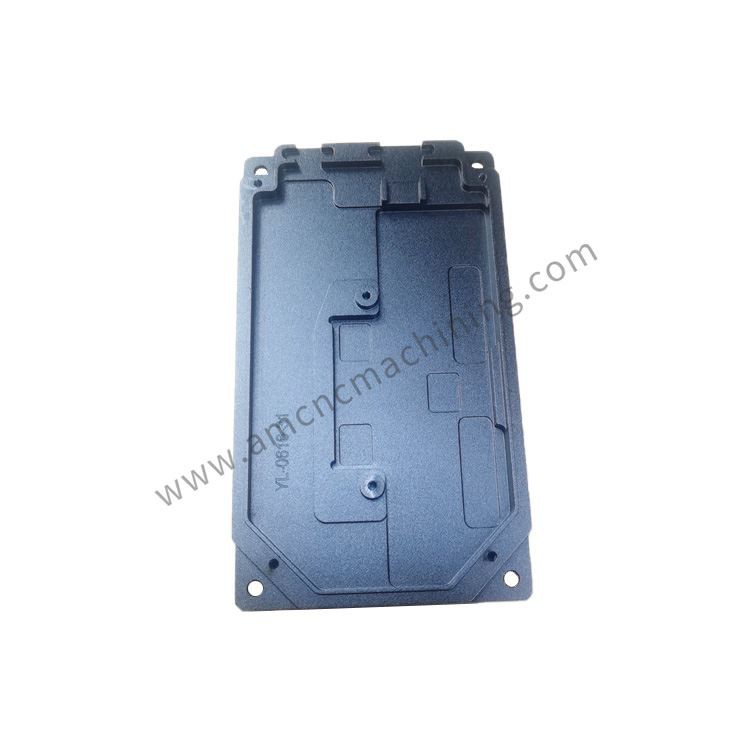
As a supplier of CNC Milling Acrylic, I understand the importance of providing high - quality, burr - free parts to our customers. Whether you need Precision Mechanical Parts or Aluminum CNC Milling Service, we have the expertise and technology to meet your requirements.
If you're interested in our products or services, don't hesitate to reach out for a procurement discussion. We're always happy to work with you to find the best solutions for your deburring and CNC milling needs.
References
- "CNC Machining Handbook" - A comprehensive guide on CNC machining processes and techniques.
- "Acrylic Plastics: Properties and Applications" - A resource that provides in - depth information about acrylic materials and their processing.
- Industry research papers on deburring techniques for plastics.


