

Machining complex geometries using CNC precision milling is a fascinating and highly technical process that has revolutionized the manufacturing industry. As a CNC Precision Milling supplier, I have witnessed firsthand the incredible capabilities of this technology and its impact on producing high - quality parts with intricate designs. In this blog, I will share some key insights on how to effectively machine complex geometries using CNC precision milling.
Understanding the Basics of CNC Precision Milling
CNC (Computer Numerical Control) precision milling is a subtractive manufacturing process that uses computer - controlled machines to remove material from a workpiece. The machine follows a pre - programmed set of instructions, which are typically created using CAD (Computer - Aided Design) and CAM (Computer - Aided Manufacturing) software. This allows for a high degree of accuracy and repeatability, making it ideal for machining complex geometries.
The basic components of a CNC milling machine include the spindle, which holds the cutting tool; the table, on which the workpiece is mounted; and the control system, which manages the movement of the spindle and the table. The cutting tools used in CNC milling can vary depending on the material being machined and the specific geometry of the part. Common types of cutting tools include end mills, ball mills, and face mills.
Designing for CNC Precision Milling
One of the first steps in machining complex geometries is to design the part in a way that is suitable for CNC milling. This involves considering several factors, such as the material properties, the accessibility of the features, and the tolerance requirements.
When choosing a material, it is important to select one that is compatible with the cutting tools and the milling process. For example, materials like aluminum are relatively easy to machine and are often used in applications where weight is a concern. You can learn more about our Aluminum CNC Milling Service. On the other hand, harder materials like stainless steel or titanium may require more specialized cutting tools and slower cutting speeds.
The design of the part should also take into account the accessibility of the features. Complex geometries may have internal cavities, undercuts, or deep pockets that can be challenging to machine. In such cases, it may be necessary to use special cutting tools or multiple setups to access all the required features.
Tolerance requirements are another critical aspect of the design. CNC precision milling can achieve very tight tolerances, but it is important to specify realistic tolerance values based on the capabilities of the machine and the material. Over - specifying tolerances can increase the cost and complexity of the machining process.
Programming the CNC Machine
Once the part design is finalized, the next step is to create the CNC program. This is typically done using CAM software, which allows the programmer to define the toolpaths, cutting parameters, and other machining operations.
The toolpath is the path that the cutting tool will follow during the machining process. For complex geometries, the toolpath can be quite intricate and may involve multiple passes and different types of movements. The CAM software uses the part geometry and the machining parameters to generate the toolpath automatically.
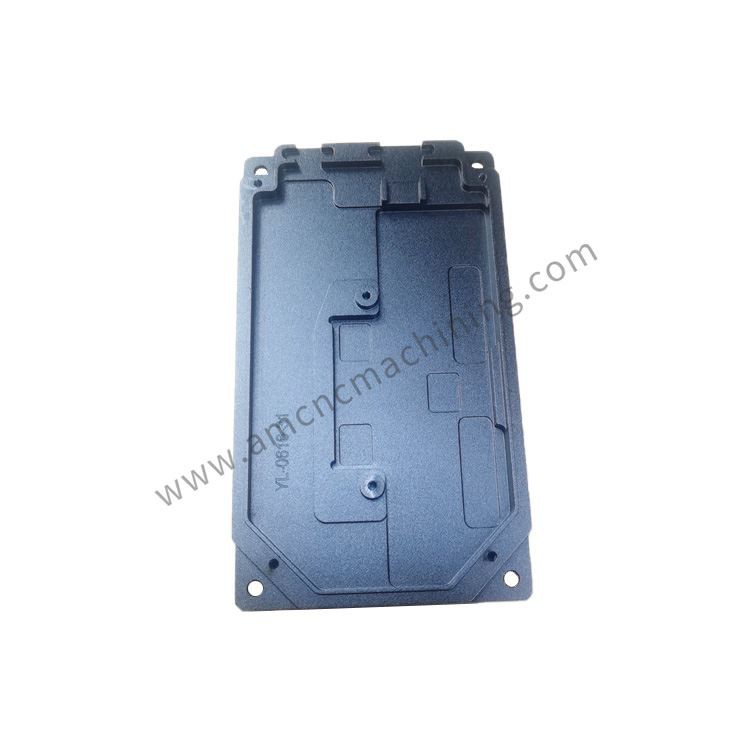
Cutting parameters, such as the cutting speed, feed rate, and depth of cut, are also crucial for successful machining. These parameters need to be carefully selected based on the material, the cutting tool, and the specific geometry of the part. Incorrect cutting parameters can lead to poor surface finish, tool wear, or even damage to the workpiece.
Selecting the Right Cutting Tools
The choice of cutting tools is essential for machining complex geometries. Different types of cutting tools are designed for specific applications and materials. For example, end mills are commonly used for milling flat surfaces and slots, while ball mills are better suited for machining curved surfaces and contours.
When selecting a cutting tool, it is important to consider the material of the tool, the number of flutes, and the tool diameter. High - speed steel (HSS) and carbide are two common materials for cutting tools. Carbide tools are generally more expensive but offer better performance and longer tool life, especially when machining hard materials.
The number of flutes on the cutting tool can also affect the machining process. Tools with more flutes can remove material more quickly but may require lower feed rates to avoid excessive tool wear. The tool diameter should be selected based on the size and geometry of the features being machined.
Setting Up the CNC Machine
Proper setup of the CNC machine is crucial for achieving accurate and consistent results when machining complex geometries. This involves mounting the workpiece securely on the table, aligning the cutting tool, and setting the appropriate machining parameters.
The workpiece should be fixtured in a way that provides maximum stability and accessibility. Special fixtures may be required for complex geometries to ensure that the part remains in place during the machining process.
Aligning the cutting tool accurately is also important. This can be done using a tool setter or by manually measuring the tool position. Incorrect tool alignment can lead to dimensional errors and poor surface finish.
Once the workpiece and the cutting tool are set up, the machining parameters need to be verified and adjusted as necessary. This includes checking the cutting speed, feed rate, and depth of cut to ensure that they are appropriate for the material and the geometry of the part.

Machining Strategies for Complex Geometries
When machining complex geometries, it is often necessary to use advanced machining strategies to achieve the desired results. Some common strategies include:
- Roughing and Finishing: Roughing operations are used to remove the majority of the material quickly, while finishing operations are used to achieve the final dimensions and surface finish. This approach helps to reduce the machining time and improve the overall quality of the part.
- Contouring: Contouring is a technique used to machine curved surfaces and profiles. The cutting tool follows a curved path along the surface of the workpiece, allowing for the creation of complex shapes.
- 3D Milling: 3D milling is used to machine parts with three - dimensional geometries. This involves using a combination of tool movements in the X, Y, and Z axes to create the desired shape.
Quality Control and Inspection
After the machining process is complete, it is important to perform quality control and inspection to ensure that the part meets the required specifications. This can involve using a variety of measuring tools, such as calipers, micrometers, and coordinate measuring machines (CMMs).
Visual inspection can also be used to check for surface defects, such as scratches, burrs, or tool marks. Any issues identified during the inspection process should be addressed immediately to ensure that the part is of high quality.
Conclusion
Machining complex geometries using CNC precision milling is a challenging but rewarding process. By understanding the basics of CNC milling, designing the part appropriately, programming the machine correctly, selecting the right cutting tools, setting up the machine properly, using advanced machining strategies, and performing quality control and inspection, it is possible to produce high - quality parts with intricate designs.
As a CNC Precision Milling supplier, we have the expertise and experience to handle a wide range of complex geometries. Whether you need CNC Mechanical Parts or Professional CNC Machining Part, we are here to help. If you are interested in our services, please feel free to contact us for a quote and to discuss your specific requirements.
References
- Groover, M. P. (2010). Fundamentals of Modern Manufacturing: Materials, Processes, and Systems. Wiley.
- Paul DeVor, T. E., & Kapoor, S. G. (2007). Manufacturing Engineering and Technology. Prentice Hall.


